
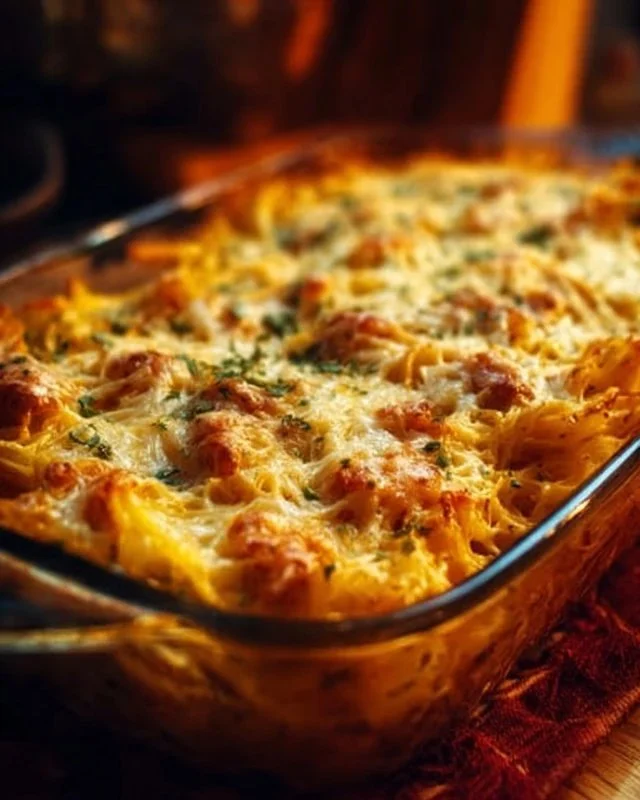
Spaghetti Squash Casserole Recipe
There’s something wonderfully comforting about a warm casserole, especially one made with spaghetti squash. This dish blends the wholesome goodness of vegetables with the heartiness of cheese, and it’s perfect for any occasion, from a cozy family dinner to a more festive gathering. I’ve made this recipe countless times, and it never fails to impress guests while keeping things simple in the kitchen.
Why you’ll love this dish
What sets the spaghetti squash casserole apart? For starters, it’s a fantastic way to sneak in some vegetables, making it a hit among kids and adults alike. The squash serves as a low-carb alternative to traditional pasta, appealing to those looking to eat healthier without sacrificing flavor. Plus, it’s an inexpensive dish, which is perfect for weeknight dinners or budget-conscious meal prep. The combination of savory sautéed veggies, melted cheese, and aromatic herbs creates a delightful harmony of flavors that will keep you coming back for more.
"This spaghetti squash casserole is a game-changer! It’s so rich and satisfying, and I love that it’s a healthier option for my family." – Happy Home Cook
Step-by-step overview
Making this casserole is a straightforward process that yields delicious results. The method starts with roasting the spaghetti squash to create fluffy strands. Meanwhile, you sauté fresh veggies to enhance their flavors, combine everything together, and finish it off with a cheesy topping. This way, the assembly is as enjoyable as the flavors are rewarding.
What you’ll need
To create this wholesome spaghetti squash casserole, gather the following ingredients:
- 1 medium spaghetti squash
- 1 cup diced tomatoes (fresh or canned)
- 1 cup chopped bell peppers
- 1/2 cup chopped onion
- 1 teaspoon garlic powder
- 1 teaspoon Italian seasoning
- 1 cup shredded mozzarella cheese
- 1/2 cup grated Parmesan cheese
- Salt and pepper, to taste
- Olive oil, to taste
Feel free to swap in seasonal vegetables or use different cheeses for a personalized touch!
Directions to follow
- Preheat your oven to 400°F (200°C). Cut the spaghetti squash in half lengthwise and scoop out the seeds. Drizzle the cut sides with olive oil and sprinkle a pinch of salt and pepper.
- Place the squash cut-side down on a rimmed baking sheet. Roast for 40–50 minutes, or until the skin is easily pierced with a fork and the flesh flakes into strands. If short on time, you can microwave the halved squash for 10–12 minutes after covering it.
- While the squash roasts, heat a splash of olive oil in a skillet over medium heat. Sauté the chopped onion and bell peppers until softened, about 5–7 minutes. Add garlic powder and Italian seasoning, cooking for an additional 30 seconds.
- Once the squash is cool enough, scrape out the flesh using a fork to create strands. In a large bowl, combine the spaghetti squash strands, sautéed vegetables, diced tomatoes, salt, pepper, mozzarella, and most of the Parmesan.
- Transfer the mixture to a lightly oiled baking dish. Sprinkle the top with the remaining Parmesan cheese and drizzle with more olive oil, if desired.
- Bake in the preheated oven at 375°F (190°C) for 15–20 minutes, until the cheese is melted and lightly golden.
- Allow the dish to rest for 5 minutes before serving. This helps the flavors meld together and makes serving easier.
Best ways to enjoy it
This spaghetti squash casserole is delicious on its own, but for an extra special meal, consider serving it with a fresh green salad or garlic bread. Pair it with a light white wine or sparkling water for a refreshing contrast. You can also top it with fresh basil or a sprinkle of chili flakes for an added kick!
Keeping leftovers fresh
If you happen to have leftovers (which may or may not happen, given how tasty this dish is!), it’s important to store them properly. Allow the casserole to cool completely, then transfer it to an airtight container. It can be refrigerated for up to 3-4 days. If you’d like to freeze it, portion it into freezer-safe containers; it can be kept frozen for about 2-3 months. Just be sure to reheat thoroughly before enjoying!
Helpful cooking tips
- Slicing the spaghetti squash may seem daunting. A sharp knife and careful handling can make this task easier. You can even microwave it briefly to soften it before cutting.
- Ensure your veggies are cooked but still crisp to maintain texture in the casserole.
- Adding a splash of balsamic vinegar or a pinch of red pepper flakes can elevate the flavor profile even more.
Creative twists
Want to mix things up? Consider adding cooked ground turkey or sausage for an extra protein punch. You could also experiment with different cheese blends, like gouda or feta, to achieve a richer taste. For a Mediterranean flair, throw in some olives and sun-dried tomatoes.
FAQ – Your questions answered
-
Can I use different vegetables?
Absolutely! Feel free to add or substitute with your favorites, like zucchini, mushrooms, or spinach. -
Is this casserole gluten-free?
Yes! This recipe is naturally gluten-free as it uses spaghetti squash instead of traditional pasta. -
Can I make this casserole ahead of time?
Yes, you can prepare it the day before, store it in the fridge, then bake when you’re ready to serve. -
What’s the best way to reheat leftovers?
Microwave in short intervals or bake in the oven at 350°F (175°C) until warmed through for the best texture. -
How do I know the spaghetti squash is done?
It’s ready when a fork easily pierces the skin and the flesh inside separates into strands smoothly.
Final thoughts
This spaghetti squash casserole is not only a nutritious choice but also a delightful meal that can bring the whole family together. I hope you relish it as much as I do! If you try this recipe, please share your experience in the comments below. Happy cooking!
Spaghetti Squash Casserole
Ingredients
Method
- Preheat your oven to 400°F (200°C).
- Cut the spaghetti squash in half lengthwise and scoop out the seeds.
- Drizzle the cut sides with olive oil and sprinkle a pinch of salt and pepper.
- Place the squash cut-side down on a rimmed baking sheet.
- Roast for 40–50 minutes, or until the skin is easily pierced with a fork and the flesh flakes into strands. Alternatively, microwave the halved squash for 10–12 minutes after covering it.
- While the squash roasts, heat a splash of olive oil in a skillet over medium heat.
- Sauté the chopped onion and bell peppers until softened, about 5–7 minutes.
- Add garlic powder and Italian seasoning, cooking for an additional 30 seconds.
- Once the squash is cool enough, scrape out the flesh using a fork to create strands.
- In a large bowl, combine the spaghetti squash strands, sautéed vegetables, diced tomatoes, salt, pepper, mozzarella, and most of the Parmesan.
- Transfer the mixture to a lightly oiled baking dish.
- Sprinkle the top with the remaining Parmesan cheese and drizzle with more olive oil, if desired.
- Bake in the preheated oven at 375°F (190°C) for 15–20 minutes, until the cheese is melted and lightly golden.
- Allow the dish to rest for 5 minutes before serving.