
I still remember the first time I plated this Pesto Pasta and Grilled Shrimp Stack for guests — it looked restaurant-fancy but came together in under 30 minutes. Bright basil pesto, slinky linguine tossed just until saucy, and smoky, lemony shrimp piled in a neat tower make it a great dinner for weeknights when you want something special without fuss. If you like dishes that balance fresh herbs, nuts, and seafood, this is one to keep in rotation; it pairs especially well with other quick comfort mains like the creamy beef pasta recipe for a crowd or multi-course meal.
Why you’ll love this dish
This stack feels upscale but is built from simple pantry and fresh ingredients. The pesto is raw, bright, and adaptable; the grilled shrimp add texture and a hint of char; and stacking makes it look plated-with-effort even when you’re short on time. It’s perfect for:
- Weeknight dinners that still impress
- Casual date nights at home
- Light summer entertaining or al fresco meals
“Fresh basil pesto and smoky grilled shrimp — every bite tastes like summer. Elegant, quick, and full of flavor.” — A happy dinner guest
The recipe is fast, flexible, and forgiving: swap linguine for spaghetti, skip pine nuts for walnuts, or double the pesto to use on bread later.
Step-by-step overview
Before you cook, here’s the quick flow so you know what to expect:
- Make a fresh pesto in a blender or food processor (bright, garlicky, and saucy).
- Boil pasta until al dente, drain, and toss with pesto, loosening with reserved pasta water if needed.
- Marinate shrimp briefly, then grill or sear until opaque and slightly charred (about 2–3 minutes per side).
- Stack the pesto-coated pasta with grilled shrimp using a ring mold or freeform on plates.
- Garnish with extra pine nuts, herbs, grated Parmesan, and lemon wedges. Serve immediately.
This overview helps keep timing tight: start the pesto first, put a pot of water on, and then marinate shrimp while pasta cooks.
What you’ll need
- Shrimp, peeled and deveined (16–20 medium, about ¾–1 lb)
- Pasta: linguine, fettuccine, or spaghetti (8 oz for 2–3 servings)
- Fresh basil leaves (about 2 packed cups)
- Pine nuts (¼ cup; can toast for more flavor)
- Parmesan cheese, grated (½ cup)
- Garlic cloves (1–2, depending on taste)
- Olive oil (about ½ cup for pesto + a little for shrimp)
- Lemon juice and zest (juice of ½ lemon + zest from 1 lemon)
- Salt and freshly ground black pepper
- Optional: red pepper flakes for heat, fresh herbs (parsley or basil) for garnish
Ingredient notes and substitutions inline:
- Pine nuts: toasted or swapped for walnuts or almonds to reduce cost.
- Parmesan: Pecorino Romano works for a saltier, tangier edge.
- Shrimp: use tail-on for a rustic look, but peel and devein for ease of eating.
Step-by-step instructions
- Prepare the pesto:
- In a food processor, combine basil, pine nuts (toast briefly if you like a nuttier flavor), grated Parmesan, garlic, lemon juice, and a pinch of salt.
- Pulse, then stream in olive oil until smooth but still slightly textured. Taste and adjust salt, lemon, or cheese.
- Cook the pasta:
- Bring a large pot of salted water to a rolling boil. Add pasta and cook until al dente (follow package times minus 1 minute).
- Reserve ½–1 cup of pasta cooking water, then drain.
- Return pasta to the pot or a warmed bowl. Add ¾ of the pesto and toss. If the sauce is too thick, loosen with a tablespoon at a time of reserved pasta water until silky.
- Marinate the shrimp:
- Toss peeled, deveined shrimp with a tablespoon olive oil, grated lemon zest, minced garlic (or garlic powder), salt, and pepper. Let sit 5–10 minutes — not long enough to “cook” in the citrus, just to season.
- Grill the shrimp:
- Preheat a grill or grill pan to medium-high. Oil the grates lightly.
- Grill shrimp 2–3 minutes per side until opaque and slightly charred. Internal temperature should reach 145°F (63°C).
- Remove and squeeze a bit of lemon over the top.
- Assemble the stack:
- Use a round ring mold (about 3–4 inches) or form freehand. Layer a scoop of pesto pasta, press gently, add a row of shrimp, then another small nest of pasta.
- Finish with shrimp on top. Spoon extra pesto, scatter toasted pine nuts, a sprinkle of Parmesan, and chopped fresh herbs.
- Serve:
- Plate immediately with lemon wedges and, if desired, a crisp green salad or garlic bread.
Short, actionable steps make this easy to follow even when cooking for company.
How to plate and pair
Presentation tips:
- Use a metal ring mold for tidy, restaurant-style stacks. For a rustic look, twirl pasta with tongs and place shrimp on top.
- Finish with microgreens or a basil chiffonade to add height and color.
- Drizzle a little extra virgin olive oil and freshly cracked black pepper before serving.
Pairing suggestions:
- Light white wines like Vermentino, Pinot Grigio, or a crisp Sauvignon Blanc.
- A simple arugula salad with lemon vinaigrette, roasted asparagus, or crusty grilled bread.
- For a heartier meal, consider serving alongside a slow-cooked sandwich like Crockpot French Dip Sandwiches for guests who want a meatier option.
Storage and reheating tips
- Refrigeration: Store leftover pasta and shrimp in separate airtight containers for best texture. Refrigerate within two hours of cooking. Consume within 2–3 days.
- Reheating pasta: Gently reheat pasta in a skillet over low heat with a splash of water or a little olive oil to restore silkiness. Avoid microwave reheating for long periods — it can dry the pasta.
- Reheating shrimp: Shrimp can overcook quickly. Rewarm briefly in a hot skillet for 30–60 seconds per side or microwave at 50% power in short bursts.
- Freezing: Prepared pesto freezes well in ice-cube trays for single portions. Cooked pasta with pesto is not ideal for freezing (texture changes), and cooked shrimp becomes rubbery when frozen and reheated.
- Food safety: Shrimp should not be left at room temperature for more than 2 hours (1 hour if ambient temp >90°F/32°C). Reheat to 165°F (74°C) if serving leftovers to vulnerable diners.
Pro chef tips
- Toast pine nuts in a dry skillet over medium heat until fragrant and golden — it deepens the flavor.
- Don’t overblend pesto: pulse to keep a bit of texture and bright color. Overprocessing can make it gummy.
- Reserve pasta water: its starches help the pesto cling and creates a glossy sauce.
- Marinate shrimp briefly: long citrus marinades can start to “cook” shrimp and change texture.
- Grill or sear shrimp on a very hot surface for quick caramelization without drying them out.
- If you lack a grill, a cast-iron skillet with a touch of oil gives great sear marks and flavor.
Creative twists
- Protein swaps: Use scallops, lobster tail, grilled chicken, or marinated tofu for a vegetarian-friendly protein.
- Pesto variations: Swap basil for arugula or spinach to make a peppery or milder green pesto; add parsley for extra brightness.
- Nut-free: Replace pine nuts with toasted sunflower seeds or omit nuts and increase cheese for texture.
- Spicy version: Stir in red pepper flakes to the pesto or add a harissa-marinated shrimp for heat.
- Serve cold: Toss pesto pasta chilled with shrimp and diced cucumber for a summer pasta salad.
FAQ – Your questions answered
Q: How long does it take to make this whole recipe?
A: Plan for about 25–35 minutes from start to finish: 5–10 minutes for pesto, 10 minutes for pasta, and 5–8 minutes to marinate and grill shrimp.
Q: Can I use pre-made pesto?
A: Yes. Use about ¾ cup of store-bought pesto and adjust with a little pasta water and lemon to freshen the flavor.
Q: Is this safe for pregnant people or young children?
A: Ensure shrimp is fully cooked to 145°F (63°C) and avoid raw or undercooked seafood. If you’re pregnant or serving small children, keep seasonings mild and verify all seafood is cooked through.
Q: Can I make this ahead?
A: Make pesto up to 3 days ahead and refrigerate in an airtight container with a thin layer of olive oil on top. Cook pasta and shrimp shortly before serving for best texture.
Q: How do I prevent shrimp from sticking to the grill?
A: Dry shrimp well before grilling, oil the grill grates, and preheat the grill to medium-high. Use a clean, oiled surface and flip only once.
Q: What if my pesto turns bitter?
A: Bitterness can come from overprocessed basil or very mature garlic. Brighten the pesto with a squeeze more lemon juice and a touch more olive oil.
Q: Can I make this gluten-free?
A: Yes — use gluten-free pasta. All other ingredients are naturally gluten-free, but check labels on store-bought pesto for cross-contamination.
Enjoy your meal!
Give this Pesto Pasta and Grilled Shrimp Stack a try the next time you want a fast, elegant dinner. If you experiment with a twist or swap, leave a comment and tell me which version became your favorite — I love hearing how readers make recipes their own.
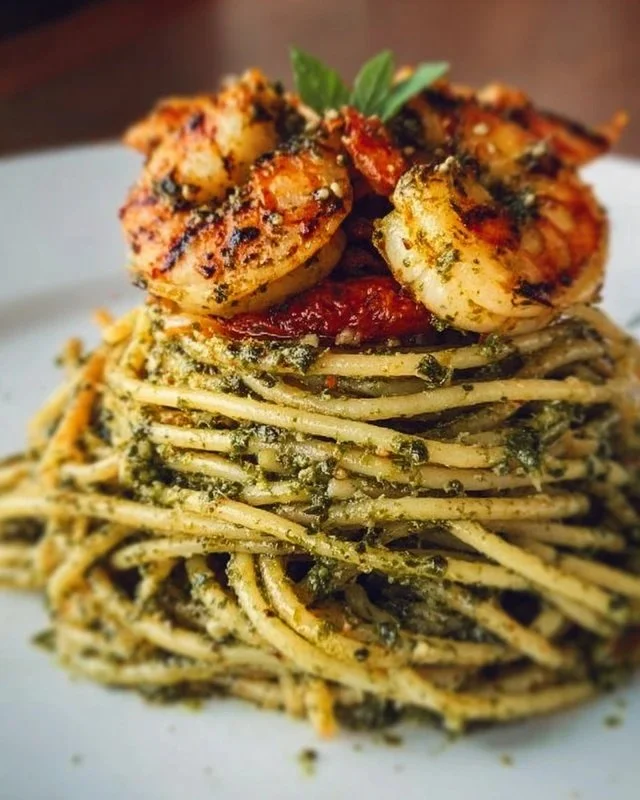
Pesto Pasta and Grilled Shrimp Stack
Ingredients
Method
- In a food processor, combine basil, pine nuts (toast briefly if you like a nuttier flavor), grated Parmesan, garlic, lemon juice, and a pinch of salt.
- Pulse, then stream in olive oil until smooth but still slightly textured. Taste and adjust salt, lemon, or cheese.
- Bring a large pot of salted water to a rolling boil. Add pasta and cook until al dente (follow package times minus 1 minute).
- Reserve ½–1 cup of pasta cooking water, then drain.
- Return pasta to the pot or a warmed bowl. Add ¾ of the pesto and toss. If the sauce is too thick, loosen with a tablespoon at a time of reserved pasta water until silky.
- Toss peeled, deveined shrimp with a tablespoon olive oil, grated lemon zest, minced garlic (or garlic powder), salt, and pepper.
- Let sit for 5–10 minutes — not long enough to 'cook' in the citrus, just to season.
- Preheat a grill or grill pan to medium-high. Oil the grates lightly.
- Grill shrimp 2–3 minutes per side until opaque and slightly charred. Internal temperature should reach 145°F (63°C).
- Remove and squeeze a bit of lemon over the top.
- Use a round ring mold (about 3–4 inches) or form freehand. Layer a scoop of pesto pasta, press gently, add a row of shrimp, then another small nest of pasta.
- Finish with shrimp on top. Spoon extra pesto, scatter toasted pine nuts, a sprinkle of Parmesan, and chopped fresh herbs.
- Plate immediately with lemon wedges and, if desired, a crisp green salad or garlic bread.