
I’ve been cooking boiled octopus for years because it’s one of those deceptively simple dishes that rewards patience more than fuss. This method produces a tender, briny centerpiece that’s perfect for a relaxed weeknight dinner, a summer grill topping, or a Mediterranean-style mezze. If you want more straightforward seafood and weeknight ideas to pair with this, try these delicious dinner recipes for inspiration.
Why you’ll love this dish
Boiled octopus is comfort food with finesse. It’s pantry-friendly (water, onion, a few aromatics), requires little hands-on time, and yields reliably tender meat when cooked gently. Unlike frying or braising, a slow simmer lets the octopus develop flavor without drying out, and the final slices make an elegant plate for salads, tapas, or simple olive-oil and lemon finishes.
“I expected rubbery tentacles, but this method made each bite silky and flavorful—exactly what I wanted for a seaside-inspired dinner.” — Home cook review
The cooking process explained
This recipe is short on complicated steps and long on timing and technique. First you prepare a flavored poaching liquid. Next you add the cleaned octopus and simmer gently until a fork slips into the thickest part. A short rest in the warm liquid evens out the temperature and keeps the meat juicy. From there you can serve it simply or finish on a grill or hot pan for char and texture.
What you’ll need
- 1 whole octopus (2.5 to 3 pounds), cleaned (beak and eyes removed)
- 8 cups water
- 1 medium yellow onion, halved
- 3 garlic cloves, smashed
- 2 bay leaves
- 1 teaspoon black peppercorns
- 2 tablespoons red wine vinegar or dry white wine (vinegar helps set color and slightly tenderize)
- 1 teaspoon salt
- Optional: 1 small celery stalk and a few parsley stems
Notes and substitutions:
- If using a frozen octopus, thaw fully in the refrigerator overnight (see FAQs below).
- White wine or a mild vinegar both work; avoid strongly flavored vinegars that can overpower the octopus.
- For a quicker cook on very small octopuses, reduce simmer time (see Directions).
Step-by-step instructions
- Rinse the octopus under cold running water and pat it dry with paper towels. Confirm the beak and eyes have been removed.
- In a large pot combine the water, halved onion, smashed garlic, bay leaves, peppercorns, vinegar (or wine), salt, and optional celery and parsley.
- Bring the liquid to a boil over high heat, then reduce to a gentle simmer so the surface barely moves.
- Using tongs, lower the octopus into the simmering liquid. Cover the pot loosely (lid tilted) to allow a little steam to escape.
- Simmer gently for 45 to 60 minutes. Start checking at 45 minutes: pierce the thickest part of a tentacle with a fork or skewer—tender octopus will accept it without resistance.
- Turn off the heat and let the octopus rest in the cooking liquid for 10 minutes to redistribute juices.
- Remove the octopus, slice against the grain, and dress with good olive oil, a squeeze of lemon, flaky sea salt, and optional chopped parsley.
Best ways to enjoy it
- Serve warm on a bed of peppery arugula with roasted cherry tomatoes and a lemon-olive oil dressing.
- Slice and grill briefly on high heat to add char, then toss with fingerling potatoes and olives for a rustic salad.
- Present as part of a mezze board with hummus, pita, and marinated vegetables.
For a light finish and to balance the savory flavors, consider serving a citrusy or sweet ending—try pairing with a bright sorbet or citrus tart from this collection of dessert recipes.
Storage and reheating tips
- Refrigerate leftovers in an airtight container within 2 hours of cooking. Use within 3–4 days.
- To reheat, warm gently in a skillet over medium-low heat with a splash of the original cooking liquid or a little olive oil. Avoid high heat which tightens the muscle fibers and makes octopus chewy.
- For longer storage, freeze slices in a single layer on a tray, then transfer to a freezer bag. Use within 2–3 months. Thaw overnight in the fridge before reheating.
Helpful cooking tips
- Simmer, don’t boil: A rolling boil can toughen the meat. Keep the surface just moving.
- Acid helps: A bit of vinegar or wine in the poaching liquid helps set color and brightens flavor; it won’t tenderize dramatically but improves mouthfeel.
- Test doneness at the thickest tentacle—if the tip of a knife or fork slides in easily, it’s done.
- Resting matters: Letting the octopus sit in the warm liquid for 10 minutes evens the temperature and keeps juices inside.
- Don’t over-salt: You can always season to taste after cooking—poaching liquid will concentrate flavor slightly.
Creative twists
- Spanish style: After boiling, flash-grill and finish with smoked paprika, chopped garlic, and extra virgin olive oil.
- Mediterranean herb vinaigrette: Toss slices with oregano, lemon zest, capers, and a splash of red wine vinegar.
- Asian twist: Cool slices and serve with a sesame-soy dressing, scallions, and toasted sesame seeds.
- For a richer plate, sear slices quickly in butter and garlic, then finish with lemon and parsley.
FAQ – Your questions answered
Q: How long does prep and cooking take?
A: Prep is about 5–10 minutes. Cooking is 45–60 minutes plus a 10-minute rest, so plan roughly 1 to 1¼ hours total.
Q: Can I use frozen octopus?
A: Yes. Thaw overnight in the refrigerator. Freezing can actually help break down muscle fibers and improve tenderness, so a previously frozen octopus often cooks more tenderly.
Q: How do I know when octopus is done?
A: A fork or skewer should pierce the thickest part of a tentacle with minimal resistance. The texture should be tender but still slightly springy.
Q: Is it safe to eat octopus the next day?
A: Yes—store in the refrigerator within 2 hours of cooking and use within 3–4 days. Reheat gently to avoid toughness.
Q: Can I grill or pan-sear after boiling?
A: Absolutely. Briefly grilling or searing adds a delicious char and contrast in texture. Cook only until color appears to avoid drying out.
Q: My octopus was chewy — what went wrong?
A: Likely cooked too quickly or at too high a temperature. Stick to a low, steady simmer and allow a short rest in the warm liquid after turning off the heat.
Q: Any dietary or allergy notes?
A: Octopus is a shellfish/allergen category for some people—check with diners. It’s high in protein and low in fat, but watch added oils or dressings.
Final thoughts
Give this simple poaching method a try—the payoff is tender, versatile octopus that’s easy to dress up or keep humble. If you make it, leave a note about how you served it and any twists you loved.
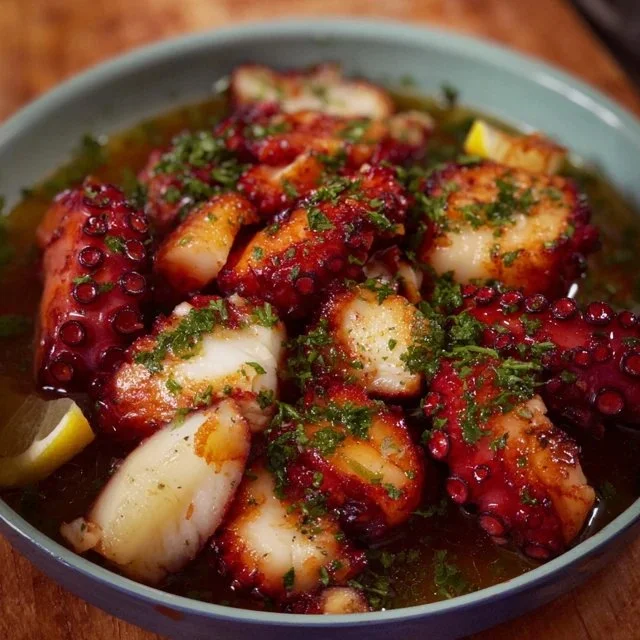
Boiled Octopus
Ingredients
Method
- Rinse the octopus under cold running water and pat it dry with paper towels. Confirm the beak and eyes have been removed.
- In a large pot combine the water, halved onion, smashed garlic, bay leaves, peppercorns, vinegar (or wine), salt, and optional celery and parsley.
- Bring the liquid to a boil over high heat, then reduce to a gentle simmer so the surface barely moves.
- Using tongs, lower the octopus into the simmering liquid. Cover the pot loosely (lid tilted) to allow a little steam to escape.
- Simmer gently for 45 to 60 minutes. Start checking at 45 minutes: pierce the thickest part of a tentacle with a fork or skewer—tender octopus will accept it without resistance.
- Turn off the heat and let the octopus rest in the cooking liquid for 10 minutes to redistribute juices.
- Remove the octopus, slice against the grain, and dress with good olive oil, a squeeze of lemon, flaky sea salt, and optional chopped parsley.