
I still remember the first time I plated seared scallops topped with a tiny spoonful of caviar — it felt like a restaurant moment you can create in under 20 minutes. This recipe pairs the sweet, briny richness of large sea scallops with the pop of luxury from caviar, making it perfect for date nights, small dinner parties, or any time you want to impress without hours in the kitchen. If you enjoy surf-and-turf or coastal flavors, you might also like Key West grilled chicken with tropical citrus marinade.
Why you’ll love this dish
This recipe turns two luxury ingredients into something approachable. Large sea scallops sear quickly and develop a caramelized crust, while a small amount of caviar adds an intense, salty finish — no heavy sauces required. It’s fast (about 15–20 minutes total), elegant, and scales easily: cook a few scallops per person for an appetizer or more for a main.
“We served these at a small dinner party and everyone thought they were from a fine dining menu — easy to make, and the caviar makes every bite feel celebratory.”
Perfect occasions: romantic dinners, holiday starters, or a light, upscale weeknight meal when you want something special without fuss.
Step-by-step overview
Quick overview so you know what’s coming: pat scallops dry, season, and sear in hot oil until golden (2–3 minutes per side). Finish briefly with butter for sheen and flavor, then top each scallop with a small spoonful of caviar and a squeeze of lemon. The total active cooking is short; most time is prep and plating.
What you’ll need
- 12 large sea scallops (about 1–1¼ inches across)
- 2 tablespoons olive oil (use a neutral-tasting olive oil or light vegetable oil for higher smoke point)
- Salt and freshly ground black pepper, to taste
- 2 tablespoons unsalted butter
- 2 tablespoons caviar (use good quality caviar or lumpfish/roes as a budget-friendly alternative)
- Lemon wedges, for garnish
Notes: If scallops are frozen, thaw in the refrigerator overnight and pat completely dry. For dairy-free, substitute clarified butter or extra olive oil.
Step-by-step instructions
- Pat the scallops dry with paper towels. Season both sides lightly with salt and a pinch of black pepper. Dry scallops sear much better.
- Heat the olive oil in a large skillet over medium-high heat until shimmering but not smoking. A cast-iron or stainless-steel pan works best for browning.
- Add scallops in a single layer, leaving space between each one — do not overcrowd the pan. Cook in batches if needed.
- Sear for 2–3 minutes without moving them. Flip and sear the other side 2–3 minutes until a deep golden crust forms and the centers are just opaque.
- Reduce heat to low, add the butter, and swirl the pan so the scallops pick up the melted butter and become glossy. Don’t let the butter brown too much.
- Remove from heat and arrange scallops on a warm plate. Top each scallop with a small spoonful of caviar.
- Serve immediately with lemon wedges on the side for guests to add a bright squeeze.
Keep steps short and decisive: hot pan, dry scallops, don’t crowd, and finish gently with butter.
How to plate and pair
Present each scallop spaced around a small plate or line them along the center of a long platter. Place the caviar on top right before serving so it keeps its texture and flavor. A thin smear of crème fraîche beneath each scallop is a classic pairing — it softens the saltiness and adds a silky contrast.
Pairing ideas:
- Champagne or a dry sparkling wine cuts through the butter and amplifies the caviar’s salinity.
- A crisp unoaked Chardonnay or a citrusy Sauvignon Blanc also complements the dish.
- For a heartier menu, consider serving alongside Texas Roadhouse smothered chicken with jack cheese for contrasting textures and flavors at a dinner party.
Storage and reheating tips
- Refrigerate leftovers in an airtight container within two hours of cooking. Eat within 24 hours for best texture; scallops become rubbery when reheated and caviar loses its pop.
- To reheat, warm gently in a low oven (250°F/120°C) for a few minutes, or briefly in a skillet over very low heat just to take the chill off — avoid high heat.
- Freezing cooked scallops is not recommended for quality reasons. Uncooked scallops can be frozen for up to 3 months; thaw overnight in the fridge.
Food safety note: keep scallops refrigerated before cooking and discard if they smell strongly fishy or ammonia-like.
Pro chef tips
- Dry thoroughly: moisture is the enemy of a good sear. Pat scallops multiple times if needed.
- Room temperature: take scallops out of the fridge 10–15 minutes before searing so they cook evenly.
- Hot pan, then oil: heat the pan first to ensure immediate crust formation, then add oil.
- Don’t move them: resist poking or nudging scallops while searing — they need contact to brown.
- Use a thermometer for precision: cooked scallops register about 115–120°F (46–49°C) and continue to carryover cook to opaque.
- Portion the caviar: a little goes a long way — 1/4 to 1/2 teaspoon per scallop is enough to taste the luxury without overwhelming the delicate scallop.
Creative twists
- Citrus-herb finish: mix a little lemon zest and finely chopped chives into the melted butter before spooning over the scallops.
- Spicy-sweet: finish with a drizzle of chili-infused oil or a micro-dash of hot honey for contrast.
- Alternative “caviar”: use salmon roe, trout roe, or even seaweed caviar for a vegan-friendly briny pop.
- Surf-and-turf plate: top sliced rare steak with a single scallop and caviar for an extravagant bite.
- Global flavors: swap butter for browned butter with a splash of soy sauce and top with tobiko for a Japanese twist.
FAQ – Your questions answered
Q: How long do scallops take to cook?
A: Large sea scallops typically take about 2–3 minutes per side over medium-high heat. They should be golden outside and just opaque inside.
Q: Can I use frozen scallops?
A: Yes — thaw them overnight in the fridge and pat completely dry before cooking. Quick-thawed scallops can release water and won’t brown well.
Q: Is caviar necessary? What can I substitute?
A: Caviar adds that signature briny pop but isn’t required. Alternatives include salmon or trout roe, lumpfish roe, or a small dollop of high-quality crème fraîche with lemon zest.
Q: How much caviar per scallop is appropriate?
A: About 1/4 to 1/2 teaspoon per scallop is ideal. It’s enough to taste the caviar without overpowering the scallop.
Q: Can I prepare scallops ahead of time?
A: Do all prep (patting dry and seasoning) just before cooking. Cooked scallops are best served immediately; reheating will change texture and reduce quality.
Q: What wine pairs best with scallops and caviar?
A: Sparkling wines (Champagne, Cava) are classic. A crisp Sauvignon Blanc or an unoaked Chardonnay are also excellent choices.
Q: Are there safety concerns with caviar?
A: Caviar should be kept cold and consumed within its labeled refrigeration window. Discard caviar that’s been left at room temperature for more than 2 hours.
Final thoughts
Seared scallops with caviar are a quick, impressive dish that elevates a simple sear into something celebratory. With a hot pan, dry scallops, and a careful finish, you’ll have restaurant-caliber bites in minutes — give it a try and tell me how yours turned out!
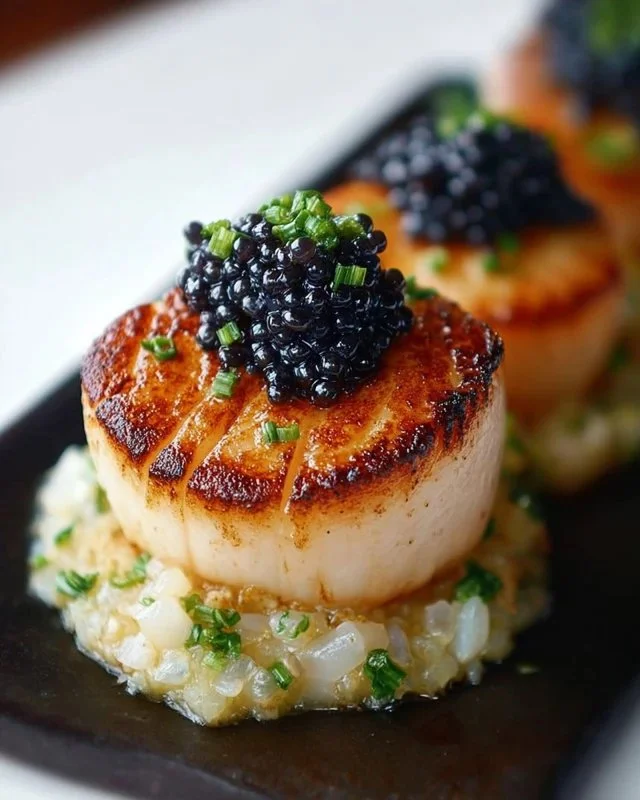
Seared Scallops with Caviar
Ingredients
Method
- Pat the scallops dry with paper towels and season both sides lightly with salt and black pepper.
- Heat the olive oil in a large skillet over medium-high heat until shimmering but not smoking.
- Add scallops in a single layer, leaving space between each one; do not overcrowd the pan.
- Sear for 2–3 minutes without moving them, then flip and sear the other side for another 2–3 minutes until a deep golden crust forms.
- Reduce heat to low, add the butter, and swirl the pan so the scallops pick up the melted butter and become glossy.
- Remove from heat and arrange scallops on a warm plate. Top each scallop with a small spoonful of caviar.
- Serve immediately with lemon wedges on the side.