
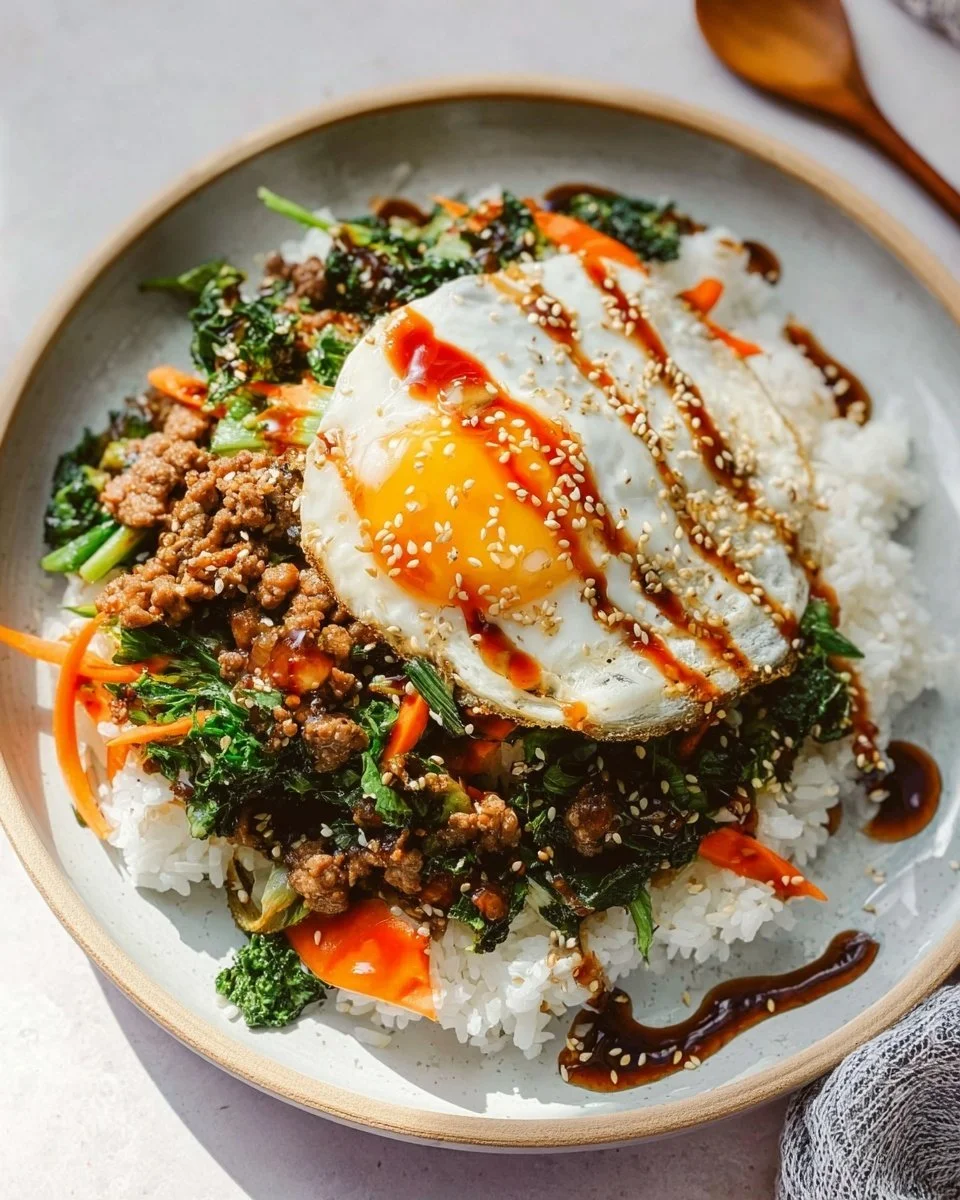
I make this easy ground beef bibimbap on frantic weeknights when I want something warm, filling, and a little extra-special without a lot of fuss. It’s a one-bowl Korean-inspired meal: seasoned ground beef sautéed with vegetables, scooped over hot rice, and finished with a sunny-side-up egg and a dab of gochujang if you like heat. If you’re building a simple brunch or weeknight rotation, this bowl pairs beautifully with other quick bites like easy breakfast recipes for a balanced spread.
Why you’ll love this dish
This recipe gives you bold Korean flavors without a long ingredient list or complicated prep. It’s fast (ready in about 20–30 minutes), budget-friendly (ground beef stretches a long way), and customizable — swap in whatever veggies you have. Families love it because kids can assemble their own bowls, and busy cooks love the minimal cleanup.
“Simple, savory, and spoon-ready — this bibimbap turned our rushed weeknight into a cozy meal everyone asked for seconds of.” — home cook review
The cooking process explained
Quick overview: brown the beef, drain excess fat, add garlic and mixed vegetables and cook until tender, season with soy and sesame, fry sunny-side-up eggs, then assemble bowls over warm rice with an egg and optional gochujang. Expect simple skillet work and one additional pan for the eggs. This helps you pace things so rice stays hot and vegetables keep a bit of texture.
What you’ll need
- 1 lb ground beef (80/20 is fine for flavor; leaner if you prefer)
- 2 cups cooked rice (short-grain or jasmine is great)
- 2 cups mixed vegetables — spinach, shredded carrots, and blanched bean sprouts are classic (use frozen mixed veg if pressed for time)
- 2 tablespoons soy sauce (low-sodium if you watch salt)
- 1 tablespoon sesame oil (toastier flavor than neutral oil)
- 1 teaspoon garlic, minced (or 1/2 teaspoon garlic powder in a pinch)
- 4 eggs (one per bowl)
- Salt and freshly ground black pepper to taste
- Gochujang (Korean chili paste) for serving, optional
Substitutions/notes: Use ground turkey or plant-based crumbles for a lighter or vegetarian version; swap rice for quinoa or cauliflower rice for lower-carb bowls; replace sesame oil with toasted sesame seeds for garnish if you don’t have the oil.
Step-by-step instructions
- Heat a large skillet over medium-high. Add the ground beef to the hot pan in an even layer. Let it brown without stirring for a minute, then break it into pieces and cook until no pink remains.
- Drain any excess fat from the skillet. Return the pan to medium heat.
- Add the minced garlic and the mixed vegetables to the beef. Stir frequently and cook until the vegetables are tender but still vibrant, about 3–5 minutes.
- Stir in the soy sauce and sesame oil. Season with salt and pepper, taste, and adjust seasoning. Remove from heat.
- In a separate nonstick pan over medium heat, add a little oil and fry the eggs sunny-side up until the whites are set but yolks remain runny, 3–4 minutes.
- Divide warm rice among bowls. Top each bowl with the beef and vegetable mixture, then place a fried egg on top.
- Drizzle a little gochujang or serve it on the side so everyone can add as much spice as they like.
Best ways to enjoy it
Serve bowls hot so the egg yolk mixes into the rice and beef for that classic bibimbap texture. For a more complete meal, add quick pickles (thinly sliced cucumber with rice vinegar), kimchi, or a crisp green salad. For a brunch-style spread, pair bowls with quick brunch ideas like toasted bread or fruit salad to round out the table.
Storage and reheating tips
- Refrigerate: Store leftovers in an airtight container within two hours of cooking. Eat within 3–4 days for best quality.
- Reheat: Reheat the beef and rice on the stovetop in a skillet with a splash of water or broth over medium heat until steaming. Microwave covered in a bowl for 1–2 minutes, stirring halfway. Add a fresh fried egg on top after reheating for the best texture.
- Freeze: Freeze the beef-vegetable mixture in a freezer-safe container for up to 2 months. Thaw overnight in the fridge before reheating. Avoid freezing cooked eggs — cook fresh when serving.
Food safety note: Ground beef should be cooked to an internal temperature of 160°F (71°C). Use a meat thermometer if unsure.
Pro chef tips
- Get a good sear: Start with a hot skillet and don’t overcrowd the pan to encourage browning and flavor development.
- Drain but don’t rinse: Drain excess fat, but keep the flavorful browned bits in the pan when adding vegetables.
- Finish with sesame oil: Add sesame oil at the end of cooking to preserve its aroma; prolonged heat dulls that toasted sesame flavor.
- Texture matters: Keep vegetables slightly crisp for contrast with the soft rice and runny yolk.
- Make it meal-prep friendly: Cook beef and rice ahead; reheat and quickly fry eggs when ready to serve.
Creative twists
- Vegetarian bibimbap: Use marinated tofu crumbles or seasoned mushrooms instead of beef.
- Spicy-sweet: Stir a teaspoon of brown sugar into the soy sauce and mix in more gochujang for a sweet-spicy glaze.
- Seafood version: Swap ground beef for chopped shrimp or flaked salmon; reduce cooking time accordingly.
- Low-carb: Use cauliflower rice and serve with extra leafy greens.
- Korean authenticity nod: Add quick sautéed shiitake mushrooms and a sprinkle of toasted sesame seeds to mimic traditional bibimbap toppings.
FAQ – Your questions answered
Q: How long does this take to make?
A: About 20–30 minutes total if rice is already cooked. With rice cooking time included, plan 35–45 minutes.
Q: Can I use pre-cooked frozen rice?
A: Yes. Pre-cooked frozen rice speeds this up — thaw or microwave according to package directions before assembling.
Q: Is gochujang required?
A: No — it’s optional. Gochujang adds authentic spicy-sweet flavor, but soy sauce and sesame oil alone give a very tasty bowl.
Q: Can I prep this ahead for lunches?
A: Prep the beef and vegetables ahead and store in the fridge. Reheat and add a freshly fried egg when eating to keep the yolk runny. Don’t freeze eggs with the cooked mix.
Q: What can I do if I don’t like runny yolks?
A: Fry eggs longer until yolks are set, or use a soft-boiled egg sliced on top for a different texture.
Q: How to make this lower in sodium?
A: Use low-sodium soy sauce, reduce added salt, and rinse salty pickled sides like kimchi before serving.
Q: Can I use leaner ground beef?
A: Yes; leaner beef reduces fat and splatter but may be slightly drier. Add a teaspoon of oil to the pan if needed.
Final thoughts
This easy ground beef bibimbap delivers big flavor with minimal fuss — a dependable weeknight winner that’s easy to customize. Give it a try, leave a comment about your favorite tweak, and enjoy the comfort of a one-bowl meal.
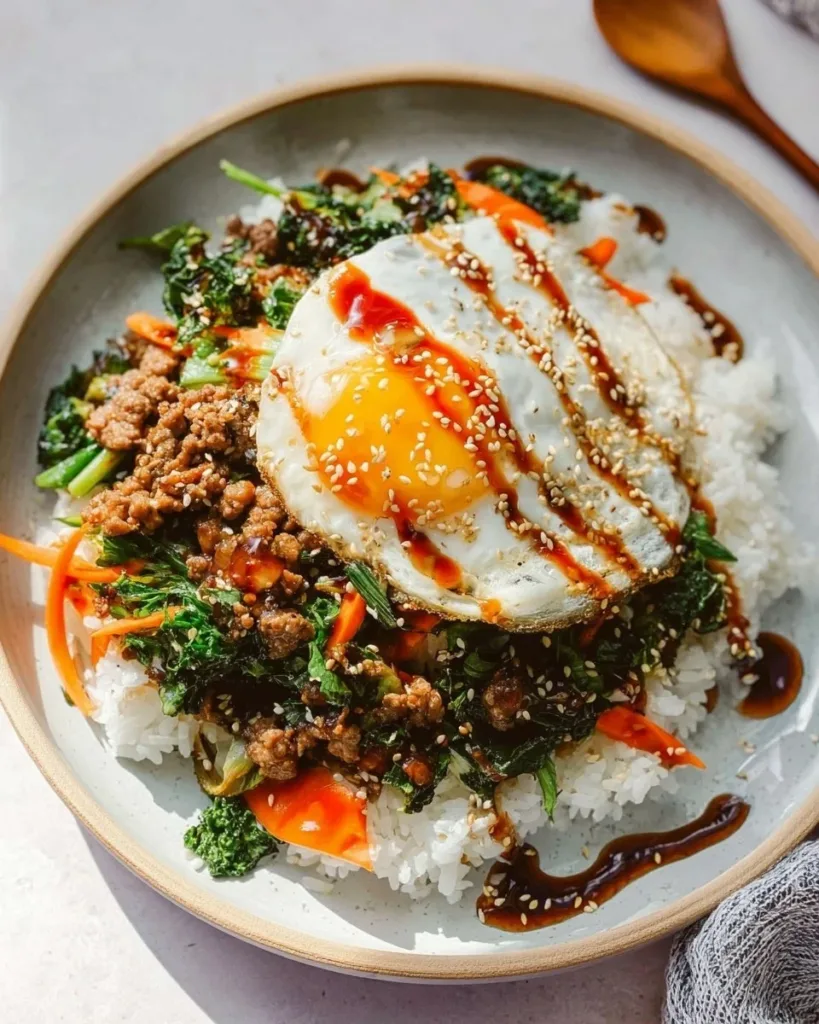
Ground Beef Bibimbap
Ingredients
Method
- Heat a large skillet over medium-high.
- Add the ground beef in an even layer and brown without stirring for one minute.
- Break the beef into pieces and cook until no pink remains.
- Drain excess fat and return the pan to medium heat.
- Add minced garlic and mixed vegetables; stir frequently until tender, about 3-5 minutes.
- Stir in soy sauce and sesame oil, season with salt and pepper, taste, and adjust seasoning. Remove from heat.
- In a separate nonstick pan, add a little oil and fry eggs sunny-side up until whites are set but yolks remain runny, about 3-4 minutes.
- Divide warm rice among bowls.
- Top each bowl with the beef and vegetable mixture, then place a fried egg on top.
- Drizzle with gochujang or serve it on the side for individual spice preferences.